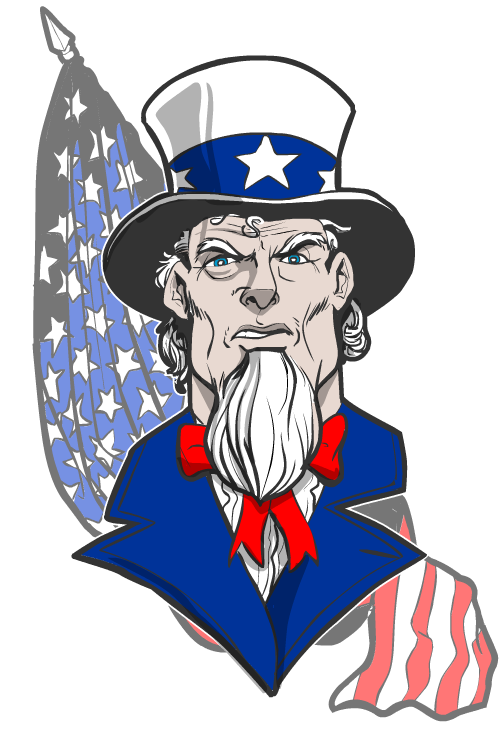
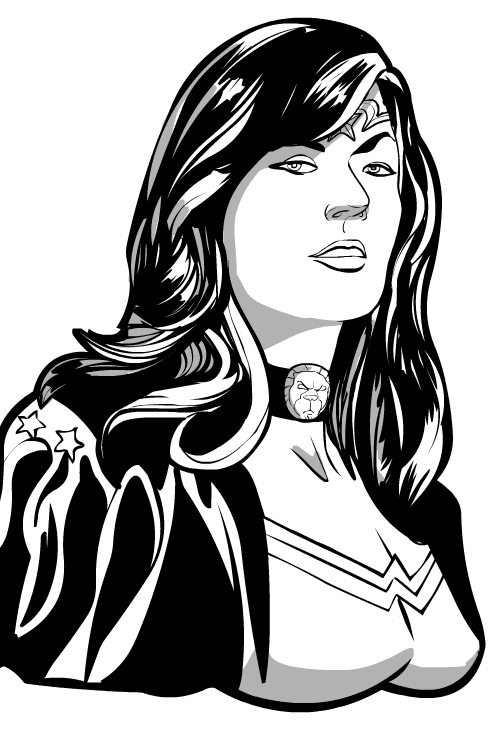
Congratulations to Rancid for winning Caption Contest 78 with this gem of a panel:
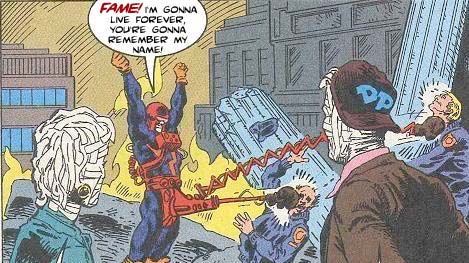
Rancid wins either any item he likes, or a portrait, to be included in the final HeroMachine 3 version. Congratulations to him and to all the other finalists!

Sponsored Links (which Premium Members will never see):
Congratulations to Rancid for winning Caption Contest 78 with this gem of a panel:
Rancid wins either any item he likes, or a portrait, to be included in the final HeroMachine 3 version. Congratulations to him and to all the other finalists!
Comments Off on Caption Contest 78 WINNER!
Posted in Challenge Favorites, Challenges
We had an overwhelming response to "Character Contest 38 – Random Name II: This time it’s personal", I thank you all for sharing your creativity and time with the rest of us. Outstanding work all the way around this week, absolutely.
As usual, I've picked out the submissions I thought were particularly noteworthy for one reason or another, and present them after the jump. Plus, this week we have TWO winners, who you'll find at the very end.
Congratulations and thank again to everyone who entered!
Comments Off on Character Design Contest 38 Winners!
Posted in Challenge Favorites, Challenges
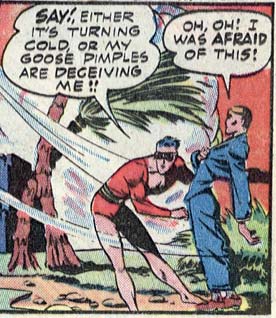
(From "Police Comics" number 15, 1943.)
Comments Off on RP: Shrinkage
Posted in Daily Random Panel
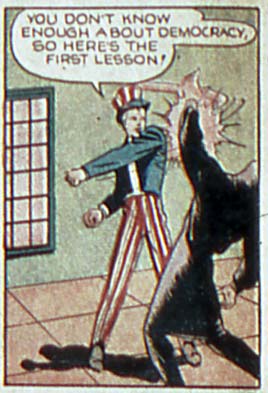
(From "National Comics" number 5, 1940. By no lesser a luminary than Will Eisner!)
Comments Off on RP: A very special July 4th message
Posted in Daily Random Panel
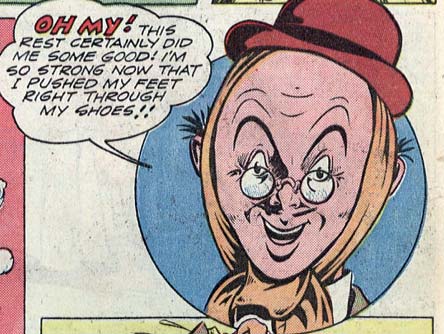
(From "Police Comics" Number 15, 1943.)
Comments Off on RP: Great moments in lame super powers
Posted in Daily Random Panel
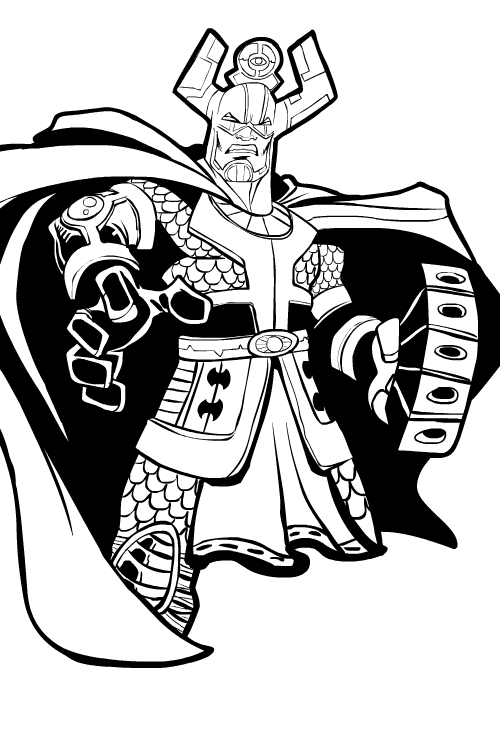
The great thing about drawing like Jack "King" Kirby is, anything goes. Lines, dots, swooshes, funky goggles, headgear that looks like a robo-rooster, it's all good. Love that guy.
Comments Off on SOD.183 – An homage to the King
Posted in Sketch of the Day
You certainly don't need me to tell you that Will Eisner is one of the greatest comics artist who ever lived, influencing the shape of the art like few others before or since. From his alternately sad and joyous homages to life in New York City to his legendary "Spirit" character, Eisner had an amazing ability to tell stories visually. He also thought deeply about the foundations of the medium, putting together a language that helped elevate it from slapstick funnies to serious art.
But just like the rest of us, he didn't leap out fully-formed as this magnificent, looming talent -- he had to work at it, think about it, practice it, and evolve over time. When he was just starting out he was but one more fish in a very crowded sea, a raw young talent -- clearly gifted, but not yet the master he would later become. Even then, however, you could see flashes of brilliance in his pacing, story telling, and panel composition. One of the great things about going through the "Police Comics" of the early 1940s is getting to see the birth of "The Spirit" and of Eisner's career as a major comics artist.
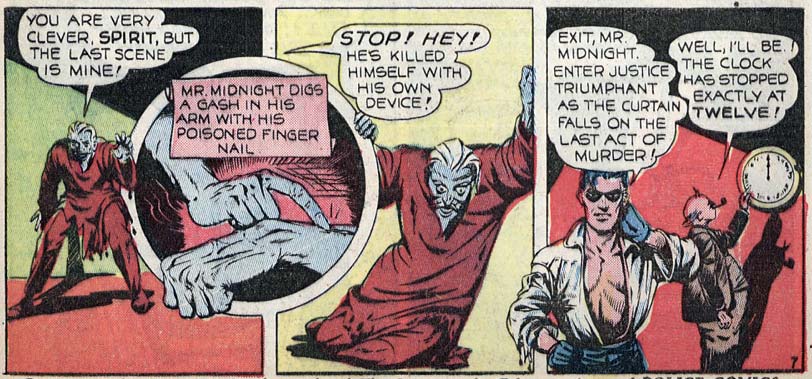
Take a look at this great series of panels that ends the story in 1943's "Police Comics" number 15:
On the one hand, you can see from the virtually non-existent scenery and background elements that Eisner is not yet fully in control of his abilities. As he grew more confident, those aspects of panel design became one of his greatest strengths, but at the beginning he focused much more on the essentials of figure and story. Even at this early stage, you can see how he plays with the panels, particularly in that third scene where Mr. Midnight is draped over the round frame frame while holding himself up against the square one. Having The Spirit break that frame as well increases the sense of dimension here, while not being as disconcerting as other artists would do with their characters speaking directly to the reader or completely trashing the page itself.
I also love how beat up The Spirit is. Eisner brought a street-tough gumshoe level of realism to his characters right from the start -- no sparking invincible blue underpants for this guy! The use of shadow in that last panel is also vintage Eisner, a great foreshadowing (ha!) of how he would later embrace the technique even more, to much greater effect.
Reading and seeing these stories not in isolation, but as part of the whole comics industry of the 1940s, really shows how Eisner both arose from, and yet transcended, the other artists of his age. Flashes of brilliance burst through the struggles of an up and coming talent still unsure of his skills in a way that's just a pure delight.
Comments Off on Early Eisner
Posted in Things I Like
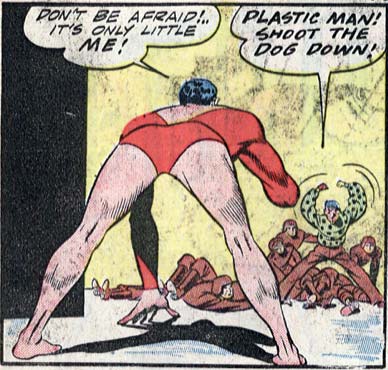
(From "Police Comics" number 15, 1943.)
Comments Off on RP: Great moments in not-so-heroic poses
Posted in Daily Random Panel
 Three middle-aged nerds (including yours truly!) review all of the MCU movies in chronological order. Short, funny, and full of good vibes, check it out and let us know what you think!
Nerdmudgeon.com
Three middle-aged nerds (including yours truly!) review all of the MCU movies in chronological order. Short, funny, and full of good vibes, check it out and let us know what you think!
Nerdmudgeon.com